Orange County Coastkeeper and local dockowners have successfully recruited 1,600 native Olympia oysters through its Shell String Project, a community-powered effort restoring California’s only native oyster species. This milestone is more than a number: each oyster contributes to cleaner water, healthier fisheries, and stronger coastlines.
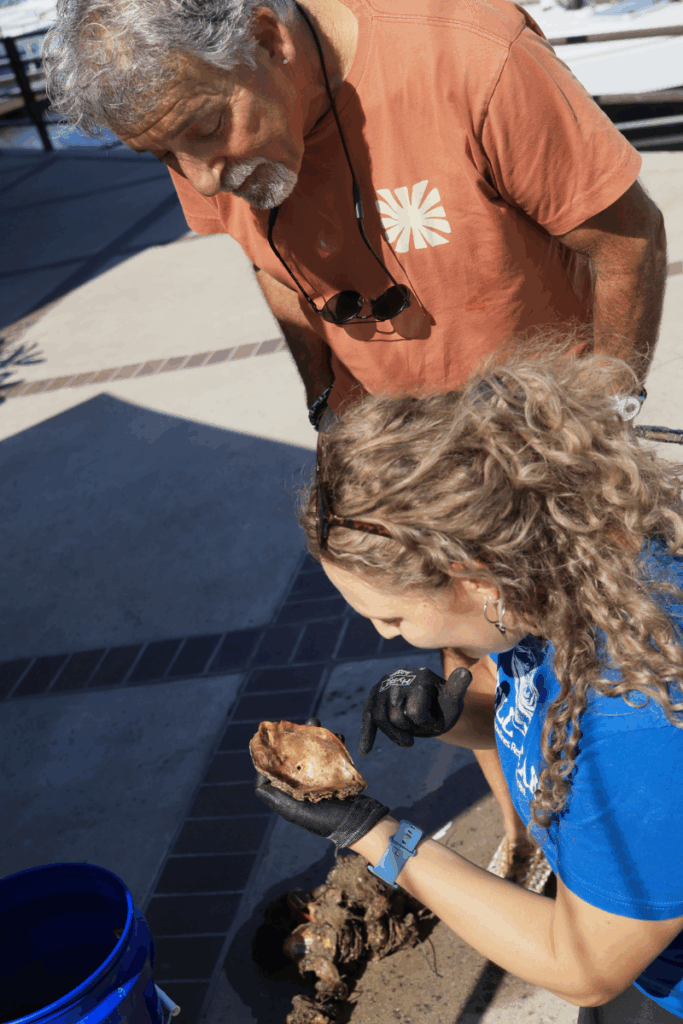
“Olympia oysters are powerhouses for our coast,” said Kaysha Kenney, Marine Restoration Director at Orange County Coastkeeper.
“One adult oyster can filter up to 50 gallons of water every single day. Multiply that by 1,600, and you start to see how community-led restoration makes a real difference for our coast.”
Beyond water quality, Olympia oysters create habitat for fish and marine life, buffer coastlines from sea level rise, and strengthen the resilience of coastal ecosystems. Coastkeeper’s community-driven approach enlists local dockowners in Long Beach and Huntington Harbour to serve as oyster caretakers, turning private docks into family science projects.
How the Shell String Project Works
- Coastkeeper collects used oyster shells from local restaurants and cures them for one year to remove harmful pathogens.
- The shells are tied together into “shell strings,” which act as nurseries for oyster larvae drifting in the water column.
- Dockowners suspend shell strings from their docks in the spring, providing space for oysters to settle and grow over the summer.
- In the fall, participants return their shell strings to Coastkeeper, where marine scientists transfer successfully recruited oysters to restoration sites in Long Beach and Seal Beach.
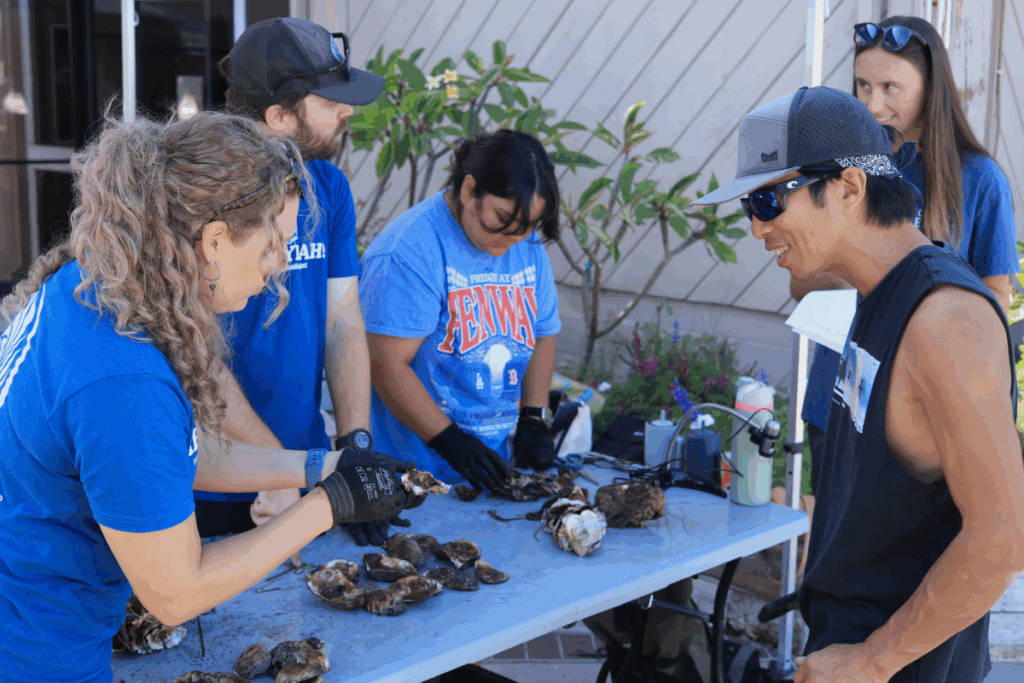
Those oysters will continue to grow on restored beds, improving water quality, stabilizing shorelines, and supporting marine biodiversity for years to come.
The Shell String Project is a collaborative effort between Orange County Coastkeeper, California State University Fullerton, California State University Long Beach, Long Beach Yacht Club, Alamitos Bay Yacht Club, Huntington Harbour Yacht Club, and the U.S. Navy.
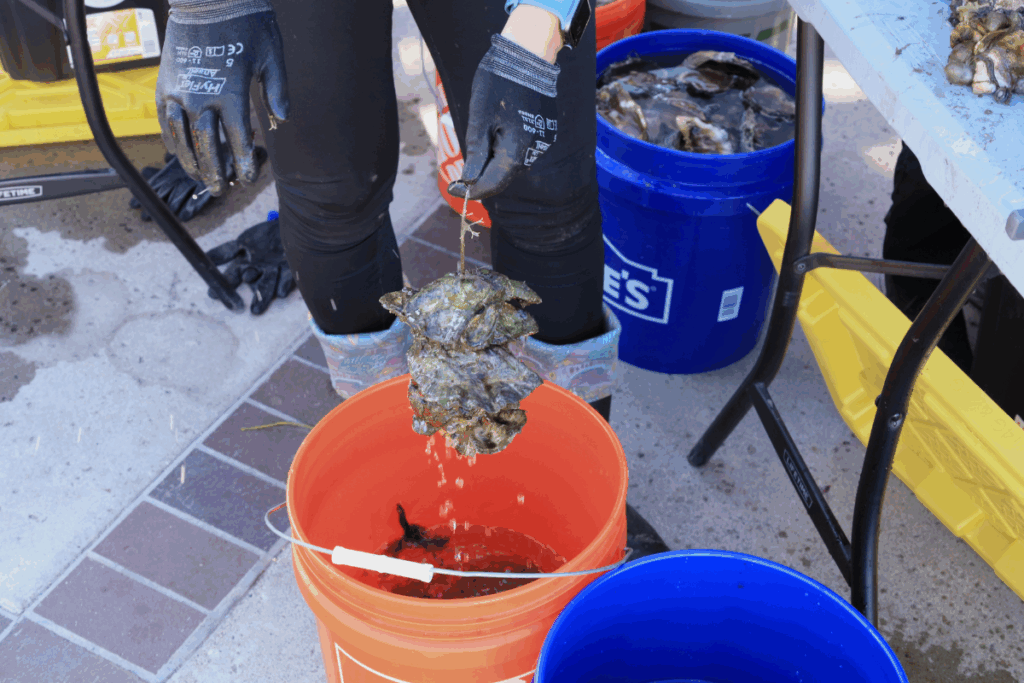
Olympia oysters are central to Coastkeeper’s Living Shorelines program, which restores coastal habitats by strategically placing native vegetation and shellfish to create natural barriers against erosion and wave energy. Living Shorelines have already been built in Upper Newport Bay and Alamitos Bay, with Seal Beach currently underway.
Learn more about Coastkeeper’s restoration program: