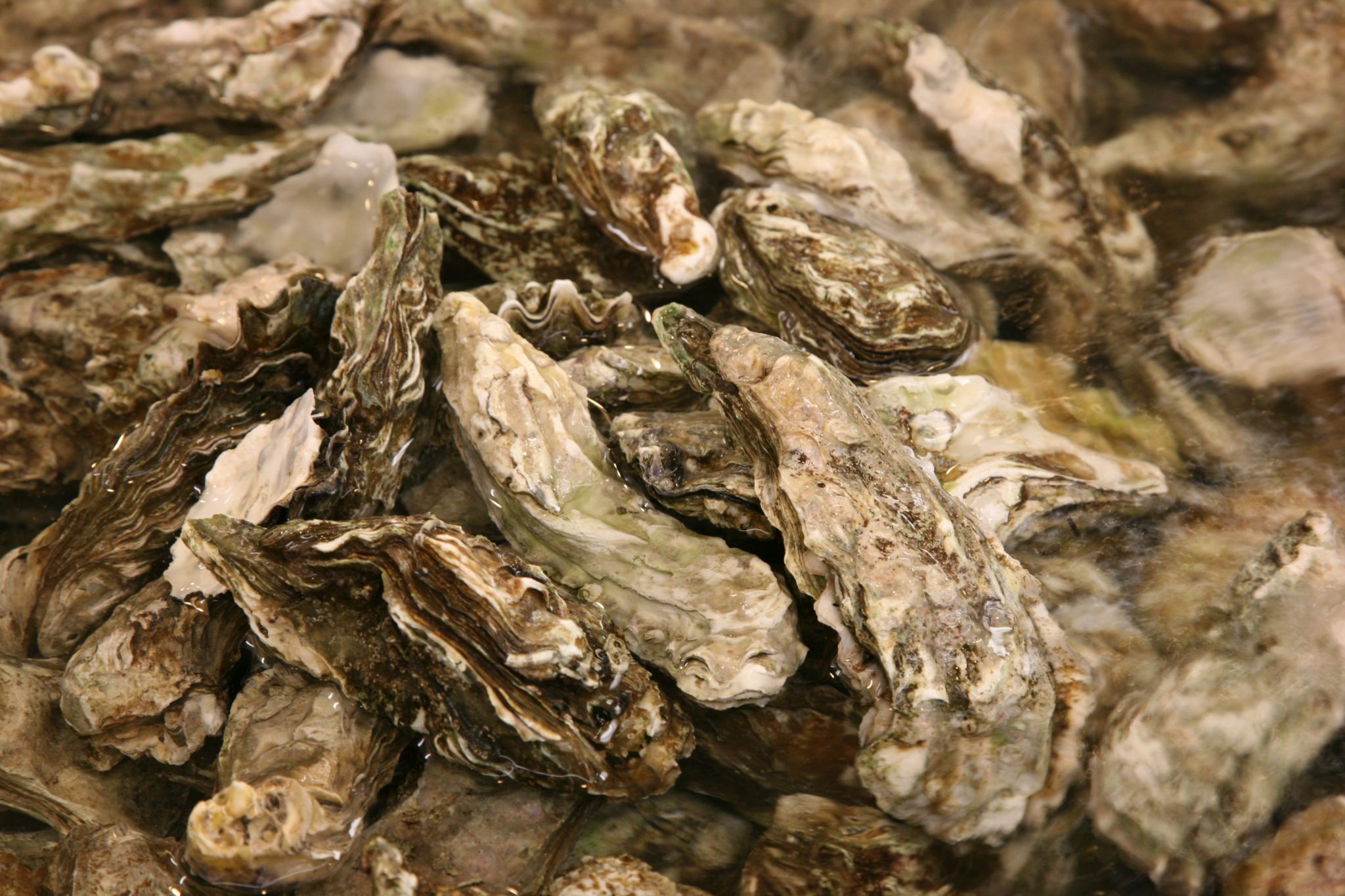
Restoration of Native Olympia Oysters in Southern California

“Olympia Oysters” by Cory & Catska Ench

In early 2012, Coastkeeper teamed up with Dr. Danielle Zacherl, Associate Professor in the Department of Biological Sciences at CSU Fullerton to implement a native oyster restoration project in Alamitos Bay in Long Beach, CA. The project, funded by the NOAA Restoration Center, California State Coastal Conservancy, and the CSU Special Fund, will restore the native Olympia oyster (Ostrea lurida), which forms an ecologically and culturally important habitat, in the Jack Dunster Marine Reserve over the course of two years with the participation of numerous volunteers and Alamitos Bay homeowners. Other project partners include Dr. Christine Whitcraft, Assistant Professor in the Department of Biological Sciences at CSU Long Beach, and KZO Education.

The Olympia Oyster

The Olympia oyster (Ostrea lurida) is the only native oyster species on the West Coast of the United States and Canada. Once widely distributed from Sitka Alaska to Baja, California, Mexico, this estuarine species historically covered large expanses of intertidal areas and was an important food source for native tribes. Today, over 85% of the world’s oyster reefs have been lost since the 1900′s and are one of the most severely impacted marine habitats on the planet. The restoration and long-term preservation of this vital habitat has become a global priority.

Click the map view a NOAA map of oyster ecosystems for two protected oyster species, including the Olympia oyster!

Habitat Function

Oysters have long been recognized as an important component of a healthy and resilient estuarine ecosystem because of the myriad ecosystem benefits they provide:

Photo by D. Zacherl – Natural oyster bed

  • Oysters create structured habitat in the form of cracks and crevices that provide habitat and refuge for other organisms, such as octopus, crabs and juveniles fishes, who shelter on the reefs/beds. Thus, they not only increase habitat complexity, but also increase biodiversity.
  • On the east coast, oyster reefs provide refuge or food for commercially important fish such as sea bass, snapper, anchovies, and flatfishes.
  • Here in California, you might notice that the endangered California least tern uses oyster shell to line its nest!
  • In addition, oysters are filter feeders, improving water clarity,  and help to stabilize mudflats. Their activity  is expected to be beneficial to eelgrass restoration efforts.
What Happened?

Historically, the Olympia oyster was harvested commercially as colonization of coastal areas increased, with many people choosing to settle in areas of high oyster density. A century ago, natural populations were nearly extirpated due to a combination of over-harvesting, dredging, water and soil pollution, and filling and draining of wetlands. The Olympia oyster can still be found throughout most of its range, including southern California. However, oysters now exist as remnant individuals on human-introduced hard substrates. The oyster bed is completely absent; we have lost an entire habitat.

Restoration in Southern California

While no historic quantitative data on oyster density in Alamitos Bay are available, historic documents indicate the presence of oyster beds in several Southern California estuaries, including Alamitos Bay and Newport Bay that supported artisanal-scale harvesting and small-scale fishery operations for at least a few decades.

We do know that oysters have been part of the local landscape further back from early 1900s by presence of deposits in the cliffs of Newport Bay and in fossils deposits in Coyote Hills in Fullerton extending back to the mid-pleistocene, which is a little over 1 million years ago. However, questions remain, including, how thick were beds, how big, how many, how dense were oysters within beds?

John Berriman, student in Dr. Zacherl’s lab, measures oyster fossils buried in Newport Bay Cliffs

Oyster fossils (D. Zacherl)

Restoration Challenges
  • Challenge #1: In the absence of significant historical data for oysters in Southern California, it is difficult to determine a “benchmark” for restoration (e.g., how a restored bed should look). It is critical to explore multiple techniques and bed types in order to determine which are the most successful. One of the most successful types of oyster habitat, a continuous bed made of dead oyster shell, is depicted in Figure 1.
  • Challenge #2: There is a relatively low population density of native Olympia oysters in Alamitos Bay. The augmentation of habitat upon which larvae can settle may help to increase the population size in the long-term.This relationship is depicted in Figure 2.
  • Challenge #3: It is unknown whether the presence of a non-native Japanese (Pacific) oyster, (Crassostrea gigas), might negatively impact the Olympia oyster. This non-native oyster is often confused with the native Olympia oyster and occupies similar habitat. Students in the Zacherl lab are currently investigating the relationship between these two oyster species. Differences between the two species are outlined in Figure 3.

Figure 1- The restored bed in Jack Dunster Marine Reserve (D. Zacherl)

Figure 2 – (D. Zacherl)

Figure 3 – (D. Zacherl)

What Are We Doing?

Preliminary field surveys of Alamitos Bay in spring and summer 2010 revealed that native oysters are present, however, there are no natural intertidal “beds” of oysters anywhere in Alamitos Bay for oyster larvae to settle and grow in large communities. Oysters are gregarious settlers and while they will settle on many hard substrates, they prefer oyster shell. This is how oyster reefs/beds are created.  The first step in this oyster restoration project is to determine the success of augmenting habitat in allowing remnant oyster populations to recover.

In Spring 2010, Dr. Zacherl implemented a small-scale native oyster restoration project in Upper Newport Bay, an area that historically supported oyster beds, by using “dead” oyster shell to augment the amount of hard substrate available for oyster spat. Four different types of shell beds were used in order to determine which was the most successful. Oyster recruitment, growth, and survival, in addition to other environmental factors, were measured over the course of two years. After 2 years, native oyster densities were 30-80 times higher on constructed oyster beds than on control plots in Upper Newport Bay! Monitoring of this project is still underway.

Dr. Zacherl implemented a similar restoration project in June 2012 in Alamitos Bay at the Jack Dunster Marine Reserve. The initial restoration bed was built with the participation of 80 community volunteers under the supervision of Dr. Zacherl and project partners. In addition, local volunteers have hung shell strings made of dead oyster shells from their docks and will maintain these strings for up to 2 months or until oyster spat recruits to the shells. These strings will be placed on the restored bed to help enhance the populations at Jack Dunster Marine Reserve.

Photo by D. Zacherl – Volunteers Building the Bed in JDMR on June 21, 2012!


Dead oyster shell ready to be laid in JDMR


Press: