
MPA Watch
Quick Links: |
Marine Protected Areas (MPAs) are now in effect! To assure the maximum effectiveness of MPAs we must be aware of the types of human activities that occur in or near them so that we can minimize any negative effects these activities may have to the marine ecosystem. With sound practices, data from effective volunteer monitoring programs can be used to assist the cities, and the Department of Fish and Game, in protecting the MPAs by identifying sites where additional resources such as signs or docent educators may be needed. Coastkeeper is running a program to assist cities and the California Department of Fish and Game in managing them through a countywide volunteer program to document human activities. The Orange County Marine Protected Area Council (OC MPAC) Watch Program enlists volunteers, community groups and local government to monitor human uses in and around the seven Orange County MPAs. The program is organized and run by Orange County Coastkeeper with the help of the cities of Newport Beach, Laguna Beach and Dana Point, as well as the California State Parks Department, the Laguna Bluebelt Coalition, and the Ambassadors of the Environment Program at the Ritz Carlton.
Overview and Purpose of the MPA Watch Program
Partnerships with key community groups and engaged citizens are a cost-effective and resource-efficient way to evaluate human ocean use and compliance with coastal protection policies and regulations. Trained volunteers can produce accurate and reliable information that can be used to better understand how individuals use coastal areas. With scientifically sound practices, data from effective volunteer monitoring programs can be used to inform regulatory and enforcement actions to help with enforcement of the MPAs.
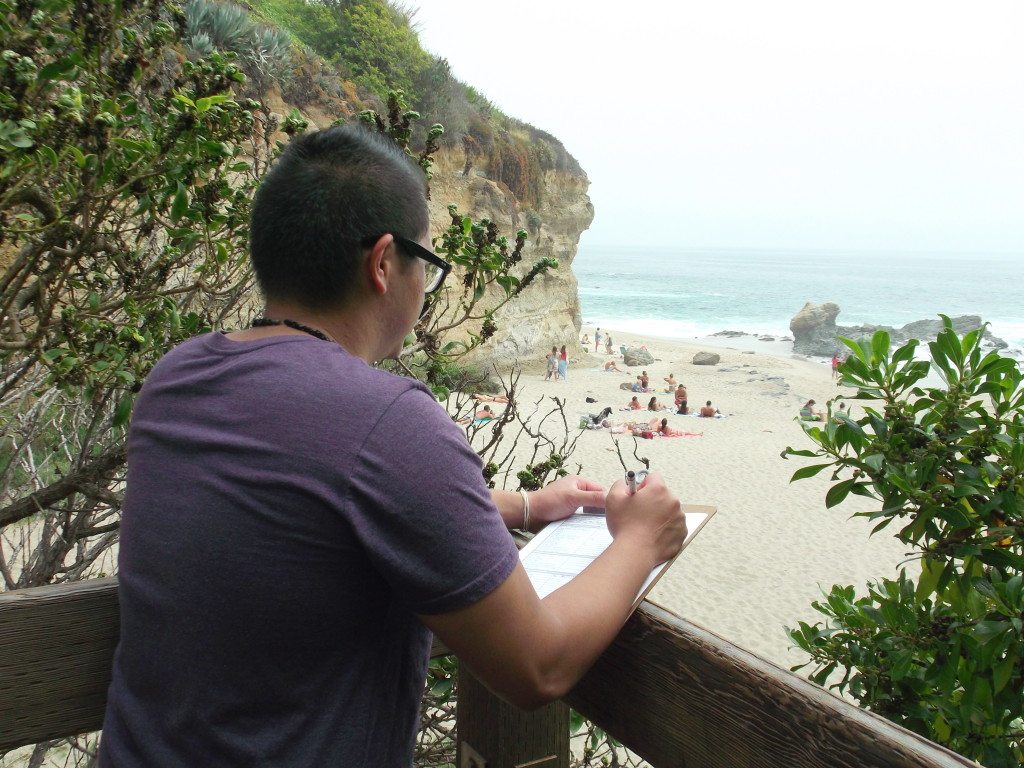
Through classroom and field trainings, volunteers learn about MPA science, local marine resources, the MLPA process, MPA locations, allowed uses, identification of common human use activities, and existing MPA monitoring efforts. After training, volunteers are provided with monitoring data sheets which serve as tracking mechanisms for human uses, clipboards, binoculars and other tools for conducting surveys. The activities monitored include consumptive (e.g. recreational and commercial shore-based and ocean-based fishing activities) and non-consumptive (e.g. kayaking, surfing, scuba diving, stand-up paddling, and wildlife viewing and beach-going) uses.This data collected by the volunteers will be analyzed for trends in human use before and after the Southern California MPA effective date and for patterns in MPA compliance or non-compliance. Orange County Coastkeepers has already collected information Crystal Cove as well as the city of Newport Beach regarding similar small scale programs. OCCK can then use the collected information to prepare reports on survey findings for partner groups, Department of Fish and Game, and other interested parties. This will allow us to compare before and after use patterns within and proximate to MPA boundaries.
The Department of Fish and Game intends to review the success of MPAs based on ecological monitoring results. However, while ecological data can tell us what is happening underwater—how populations and ecosystems are changing—concurrent human use surveys are needed to help provide context for ecological data interpretation. It is essential that more than just ecological factors are monitored to better understand MPA effectiveness. Collected MPA Watch data provides the human use context needed to assist with the interpretation of biological data in the South Coast region through monitoring of human uses inside and outside MPAs. Compliance and use monitoring will help illustrate whether MPAs are given the opportunity to achieve the goals of enhancing and restoring habitat and marine life populations.MPA watch data can be used to measure initial changes in consumptive and non-consumptive user groups following MPA implementation, which will help to show whether certain user groups are experiencing notable use pattern changes. In the future, this data can be used to describe the degree to which any observed changes are attributable to MPA implementation. Documentation of compliance and non-compliance can also provide valuable insight to MPA managers about where to target limited resources for compliance assurance, outreach and enforcement. They also provide cost effective ways to highlight areas to target the limited Department of Fish and Game education and enforcement resources. It will help track the frequency and location of illegal activities which will help focus enforcement responses. Another important secondary benefit includes MPA stewardship and education regarding coastal resources, their threats, and protection measures helps build knowledge and understanding among interested individuals and groups as well as promote pubic engagement and stewardship.
How does it work?
Volunteers can sign up with Orange County Coastkeeper or one of the organizations involved in implementing
this program and will be assigned to a specific area for observation. You will be trained in proper monitoring methods and given information about your site location as well as directions to the area and beach access locations especially for the smaller neighborhood beaches. Once you arrive at the locations with the provided materials, usually data collection sheets, you can get to work.
What does a MPA Watch Volunteer do?
MPA Watch volunteers monitor all human uses in MPA’s including resting and games, running, walking, fishing, swimming, surfing, boating, diving and interacting with local tide pools. Most of these beach activities have little if any effect on the local Marine Protected Areas. Volunteers will also monitor consumptive activities such as collection from tide pools, and trampling that would disturb or displace any marine and plant life in the tide pools and surrounding beaches.