


MPA Watch is a network of programs that support healthy oceans through community science by collecting human use data in and around our protected areas.
MPA Watch trains volunteers to observe and collect data on human uses of coastal and marine resources both inside and outside of marine protected areas (MPAs). Volunteers use standardized protocols to collect relevant, scientifically rigorous, and broadly accessible data.
Coastkeeper is a certified MPA Watch partner in Orange County, California.
Visit the MPA Watch website.
Get involved in the MPA Decadal Management Review!
Click here for the latest information.
Overview and Purpose
The purpose of the Orange County Marine Protected Area Watch (MPA Watch) program is to document all human uses in Marine Protected Areas (MPAs). This data collected is used by state and local agencies, non profit organizations and the public to make decisions on how to allocate resources to MPAs. Partnerships with local community groups and engaged citizens are a cost-effective and resource-efficient way to evaluate human uses in MPAs and compliance regulations. Trained volunteers produce accurate and reliable information that is used to better understand how individuals use MPAs. With scientifically sound practices, data from effective volunteer monitoring programs inform regulatory and enforcement agencies to help with enforcement of the MPAs.
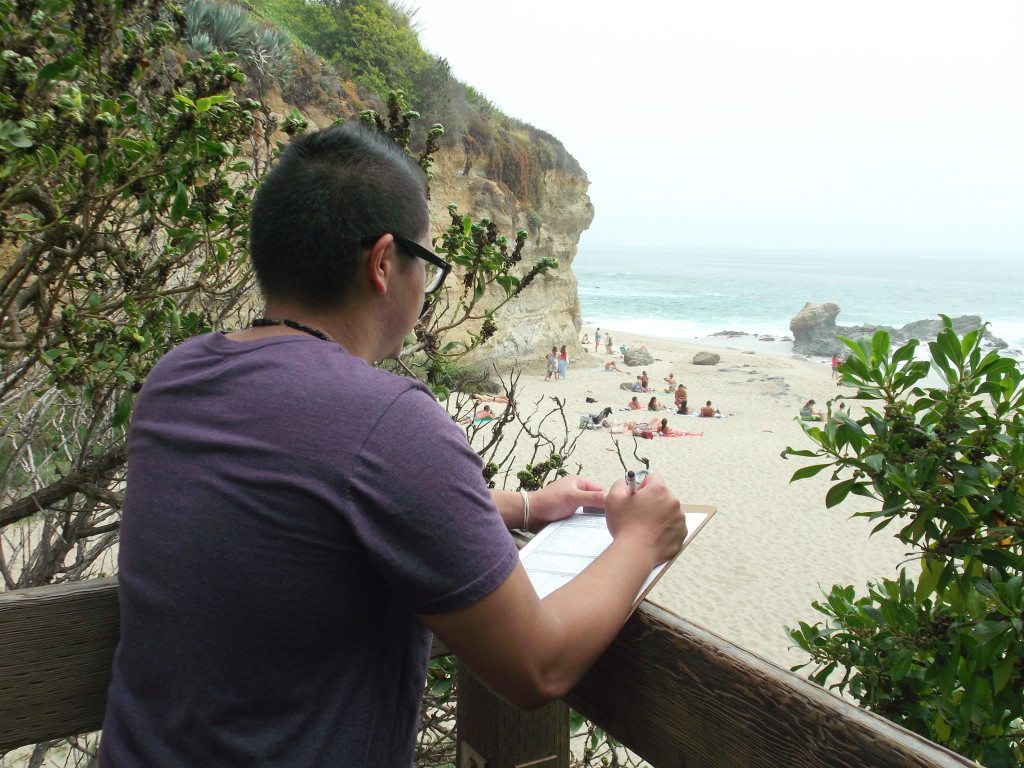
Through classroom and field trainings, volunteers learn how our MPAs were created, MPA locations, regulations, and identification of common human uses. After training, volunteers are provided with binoculars, data sheets and access to an online database to document the human uses they see during surveys. Surveys take five to 30 minutes and are conducted at 25 locations in Newport Beach, Laguna Beach and Dana Point.
The activities monitored include consumptive (e.g. recreational and commercial shore-based and ocean-based fishing activities) and non-consumptive (e.g. kayaking, surfing, scuba diving, stand-up paddling, and wildlife viewing and beach-going) uses.
More Information
The data collected by volunteers is analyzed for trends in human uses and compliance with MPA regulations. Coastkeeper then uses the collected information to produce reports on survey findings that are distributed to the California Department of Fish and Wildlife (DFW), local agencies and non profit organizations, and other interested individuals. The data is used to make decisions on where to allocate resources including signs and staff to meet the MPA goals of protecting the natural diversity and abundance of marine life, and the structure, function and integrity of marine ecosystems..
The DFW intends to review the success of MPAs based on ecological monitoring results every ten years. However, while ecological data can tell us what is happening underwater—how populations and ecosystems are changing—concurrent human use surveys are needed to help provide context for ecological data interpretation. It is essential that more than just ecological factors are monitored to better understand MPA effectiveness. MPA Watch data provides the human use context needed to assist with the interpretation of biological data through monitoring of human uses inside and outside MPAs. Compliance and human use monitoring will help illustrate whether MPAs are given the opportunity to achieve the goals of enhancing and restoring habitat and marine life populations.
MPA Watch data can be used to measure changes in consumptive and non-consumptive user groups over time, which will help to show whether certain user groups are experiencing notable use pattern changes. This data can be used to describe the degree to which any observed changes are attributable to MPA implementation. Documentation of compliance and non-compliance can also provide valuable insight to MPA managers about where to target limited resources for compliance assurance, outreach and enforcement. They also provide cost effective ways to highlight areas to target the limited DFW education and enforcement resources. It will help track the frequency and location of illegal activities which will help focus enforcement responses.
Another important secondary benefit includes MPA stewardship and education regarding coastal resources, their threats, and protection measures helps build knowledge and understanding among interested individuals and groups as well as promote public engagement and stewardship.
Get Involved!
Enjoy your Marine Protected Areas (MPAs)! Our thriving MPAs provide ecosystem protection along with swimming, kayaking, diving, and tidepooling opportunities. Most also allow fishing.
Throughout California, residents are embracing MPAs and joining local efforts to monitor them. Our volunteers are making a difference in ocean protection – and you can too! Email Wendy at wendy@coastkeeper.org for more information.
Learn more about the statewide MPA Watch Program.
Here’s a list of MPA designations:
- State Marine Reserve (SMR): fully protects fish, wildlife, and habitat from all extractive activities.
- State Marine Park (SMP): allows for some recreational fishing.
- State Marine Conservation Area (SMCA): allows for some consumptive recreational and commercial activities.

What Does an MPA Volunteer Do?
MPA Watch volunteers monitor all human uses in MPA’s including resting and games, running, walking, fishing, swimming, surfing, boating, diving and interacting with local tide pools. Most of these beach activities have little if any effect on the local Marine Protected Areas. Volunteers will also monitor consumptive activities such as collection from tide pools, and fishing that would disturb or displace any marine and plant life in the tide pools and surrounding beaches.
MPA Training Material
MPA Training Material:
How Does It Work?
Volunteers can sign up with Orange County Coastkeeper or one of the organizations involved in implementing this program. You will be trained in proper monitoring methods and given information about priority survey sites and locations near your home including directions to the area and beach access locations, especially for the smaller neighborhood beaches. Once you arrive at the locations with the provided materials, you can get to work. Surveys take five to thirty minutes to complete.
Annual Reports
- MPA Watch 2023 Annual Report
- MPA Watch 2022 Annual Report
- MPA Watch 2021 Annual Report
- MPA Watch 2020 Annual Report
- MPA Watch 2019 Annual Report
- MPA Watch 2018 Annual Report
- MPA Watch 2017 Annual Report
- MPA Watch 2016 Annual Report
- MPA Watch 2015 Annual Report
- MPA Watch 2014 Annual Report
- MPA Watch 2013 Annual Report
- MPA Watch 2012 Annual Report
Additional Resources
- MPA Watch Guide and Directions – Dana Point SMCA
- MPA Watch Guide and Directions – Crystal Cove SMCA
- MPA Watch Guide and Directions – Laguna Beach SMR and SMCA
- MPA Watch Guide and Directions – Upper Newport Bay
- Fishful Thinking: Rhetoric, Reality, and the Sea Before Us
- History of MPA Watch Development and Support
- Department of Fish and Wildlife, MPA
- MPA Watch Training Manual and Reference Guide